The Arboretum: "Conversing with other nations"


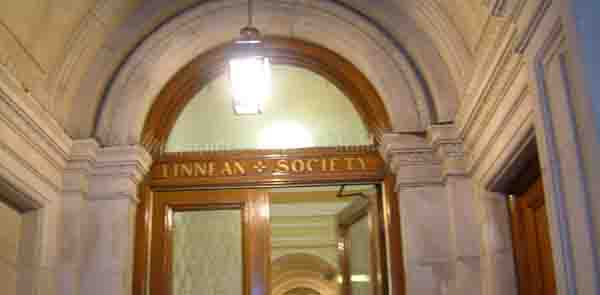
International interdisciplinary conference which was held at the Linnean Society, London, 6-8 September 2006


This conference examined the cultural history and geography of tree collections and the different types of arboretum. Spaces where trees  shrubs are grown for pleasure and instruction started to be called arboretums around 1800. They became an important model in the nineteenth century for institutional and private gardens, and for public parks. 

Themes for discussion included the philosophical, aesthetic, horticultural and educational theories underlying the planning, layout, organisation, and management of arboretums. The links with botanical gardens, the horticultural trade and the scientific development of forestry will be explored. The conference will consider the role of international networks, exploration, trade and imperialism in tree collecting. It will trace the interconnections between horticulture, botany and forestry, the role of institutions and the relationships
between arboretums and their local social, cultural and institutional context.

This conference was part of a major three-year AHRC-funded project on the cultural history of English nineteenth-century arboretums at the School of Geography, University of Nottingham, directed by Professor Charles Watkins and Professor Stephen Daniels.

For further details contact:  Dr. Paul Elliott , School of Geography, University of Nottingham: or Professor Charles Watkins


Christopher Harris spoke at conference

Christopher Harris presented a PowerPoint presentation at the conference having been Inspired by Loudons statement in his book on the Derby Arboretum that he was grateful to be the humble instrument of carrying into effect Mr. Strutts Munificent Design, Chris offers a corrective to the usual exclusive emphasis upon Loudons role in the development of the Derby Arboretum which is especially limited in the case of urban parks where so many more individuals were involved. He contends that the Strutts played a more important role in the design and development of the arboretum than has previously been accepted and that it was the MP Edward Strutt who initially encouraged Loudon to undertake the Derby project rather than his uncle Joseph as part of their broad efforts to transform central Derby . Furthermore, inspired by the works of Thuin, as nineteenth-century maps suggest, the Arboretum and Strutts Park were originally designed as mirrored images one to the north of Derby and the other to the south, both had winding paths and flower gardens but were not initially laid out as tree collections. Both parks were originally intended for private use, until Joseph had his garden converted for public entertainment and instruction, though Strutts Park later appears to have been opened to the public before the land was developed for housing.


As the web manager of a website on the Derby Arboretum, Chris also discussed the nature of the major restoration programme that was undertaken between 20002 and 2005, the community reaction to the project, how he went about constructing the website and the role that this has had in furthering improvements.

Updated from Dr. Paul Elliott (conference abstracts)


Home Page

Latest News

Best Non Gamstop Casinos
Non UKGC Casinos
Bookmakers not on Gamstop